
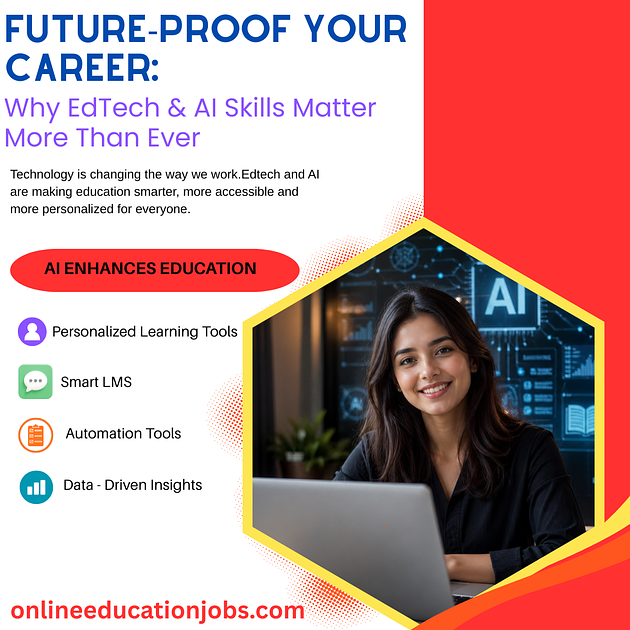
Future Proof Your Career: Why EdTech Skills Matter More Than Ever
Technology is reshaping how we learn. Educational technology (edtech) and artificial intelligence (AI) are making education smarter, more accessible, and personalized for learners and educators.
EdTech is the use of technology to improve how we teach and learn. From virtual classrooms and learning management systems (LMS) such as Canvas, SeeSaw, and Schoology to communication apps such as ClassDojo and interactive tools such as Kahoot!, it helps make education more efficient, engaging, and accessible to a wider audience.
The Future of Learning
The future of education is undeniably digital. With continuous advancements in AI, we can expect even more immersive experiences such as virtual reality classrooms, intelligent learning companions, and real-time language translation.
EdTech and AI are not just trends, they are powerful tools shaping a smarter, more inclusive education system. As technology continues to evolve, so does the way we learn, teach, and grow.
Upskilling as a remote worker
For remote workers, knowing how to use AI and learning technology is now a must-have skill rather than just a choice. Since you don't have a physical office for quick help or direct supervision, these tools help you stay productive and keep your skills sharp. Learning and mastering AI and digital learning tools ensures you can work faster, stay competitive, and keep up with a fast-changing global job market on your own.
At the same time, edtech helps remote workers keep improving their skills, learn faster, pick the right platforms, and adjust quickly as job demands change, which is important in a highly competitive global market. When combined with Artificial Intelligence, it not only improves day-to-day performance but also helps ensure long-term job stability in a fast-changing, tech-driven world.
How AI Enhances Education
- Stay Competitive with Personalized Learning Tools: Understanding how AI-driven platforms tailor content to individual learners can help you stand out in roles involving training, tutoring, or instructional design.
- Leverage AI-Powered Learning Management Systems: Learning how to use various LMS tools allows you to deliver faster, more effective support in remote education and customer-facing roles.
- Increase Efficiency with Automation Skills: Upskilling in tools that automate tasks like grading or feedback can save time and boost productivity, making you more valuable to employers.
- Use Data to Drive Better Results: Knowing how to interpret learning analytics and performance data helps you make informed decisions, improve outcomes, and demonstrate measurable impact in your work.
Remote work is evolving quickly, and job seekers can’t rely on basic digital skills alone. There’s a growing demand for knowledge in edtech tools and AI-powered workflows. As companies adopt platforms for virtual learning, automation, and data-driven decision-making, remote workers who understand tools like learning management systems, AI writing assistants, and analytics platforms have a clear advantage. Upskilling in these areas not only opens the door to more opportunities in education, but also helps workers stay competitive in a job market that increasingly values adaptability, tech fluency, and the ability to work alongside AI rather than be replaced by it. For quick assessment tasks, an easy grader can calculate percentages and letter grades without adding another complicated workflow.